Managing AI Dependency Velocity with AI Canary Environments
AI dependencies change rapidly, risking app stability. Use a small, independent "canary" app to test upgrades before main deployment. Pair with AI agents for validation and strong production monitoring to catch issues early and minimize disruption.


AI evolves fast. To keep up, you need to track how quickly your dependencies change and how those changes could affect your systems.
If your team works with Generative AI and LLMs, you've likely faced challenges, especially due to rapid changes in models, versions, and libraries. Teams can spend weeks refining agent workflows, tool setups, and keeping SDKs stable, only for a minor update to break everything.
For engineering leaders, old methods for managing dependencies no longer work. Staying current now requires more than automated bots. You need to rethink how your team is organized and how you track updates.
The Velocity Problem: Why the Traditional Pipeline Fails
In traditional enterprise Java setups, updating dependencies is predictable. The team updates the Spring Boot version, then the CI/CD pipeline runs unit and integration tests. If all tests pass, the build moves to staging.
AI-native applications are different and unpredictable by nature. If an AI SDK changes how it handles prompt templates, token formatting, or tool-calling loops, regular compiler checks often miss these issues.
Testing these rapid changes on a large enterprise codebase makes things even harder:
- Blast Radius: Even a small change in an SDK can impact many microservices, making it tough to find the root cause.
- The AI Agent Token Tax: Many teams use AI Dev Agents to automate code migrations and upgrades. But letting an AI agent analyze a large, complex codebase to diagnose a library update can be expensive. Debugging with LLMs on large codebases consumes millions of tokens and increases computing costs. And LLMs may not pick up the latest version of the code library unless instructed.
Testing new AI frameworks directly on your main codebase wastes both developer time and resources.
For engineering leaders, old methods for managing dependencies no longer work. Staying current now requires more than automated bots. You need to rethink how your team is organized and how you track updates.
The Solution: The "Living Canary" Architecture
To keep up with this fast pace, enterprise leaders should separate dependency testing from the main app by creating a small, independent Canary Reference Application. (See GitHub link)
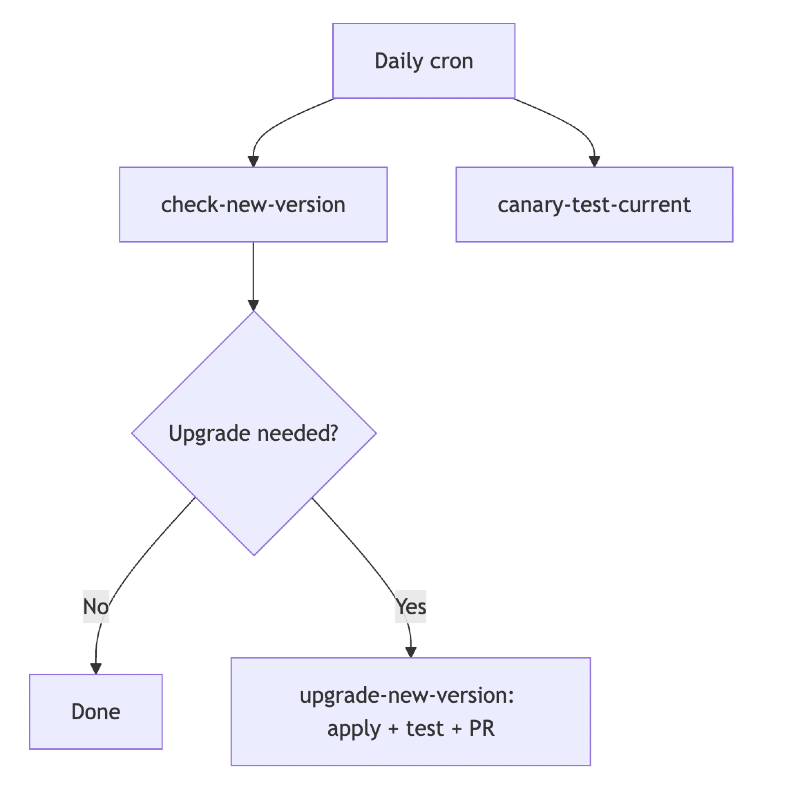
Think of this as a living lab. The test app doesn't include private business logic but replicates key architectural patterns like orchestration frameworks, model routers, vector database connectors, and tool-calling setups.

Instead of testing upgrades on your main codebase, use the Canary App build for upgrades first. When a new dependency or SDK version appears, the pipeline runs validation workflows on the Canary app. If the Canary stage passes all tests and checks, the upgrade moves forward in the regular release cycle.
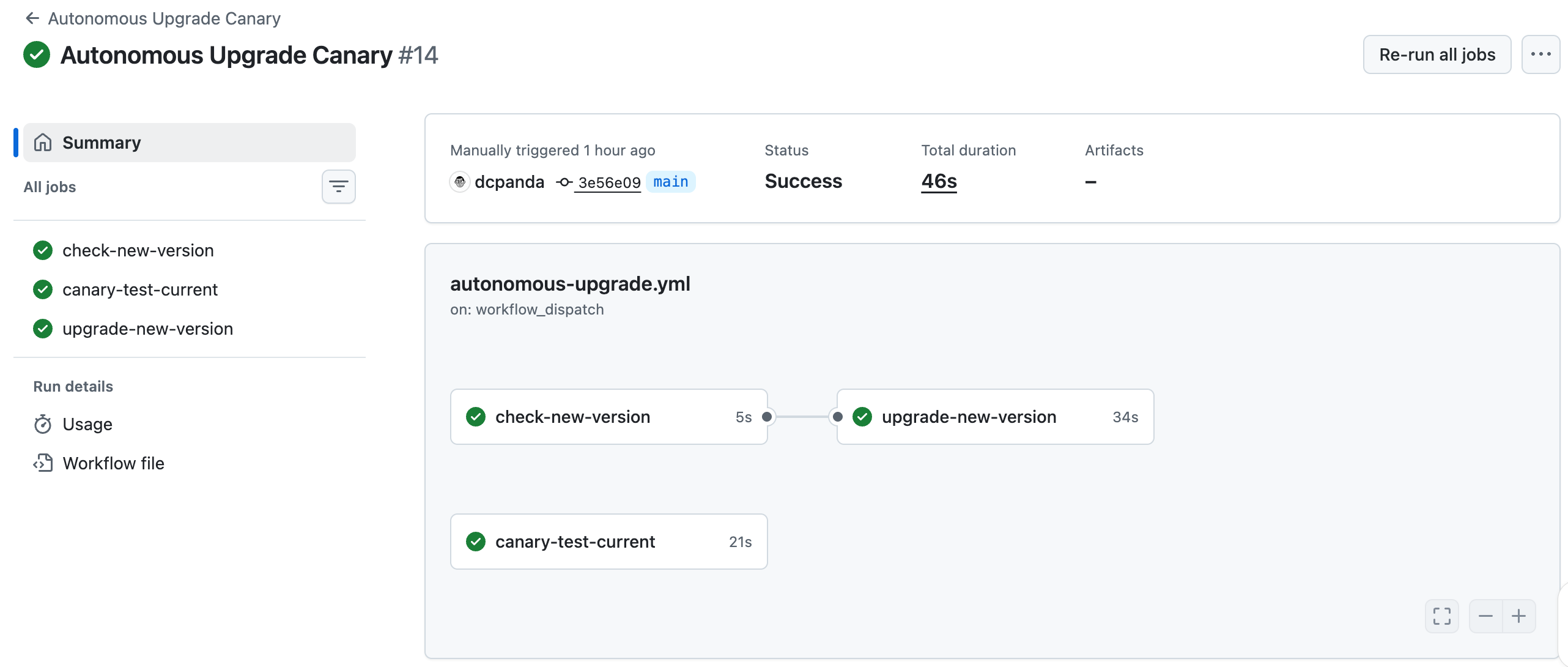
This way, you catch breaking changes early and keep your main production pipeline stable. Setting up Canary validation is simple—it can run automatically in your CI/CD setup and won't disrupt your workflow.
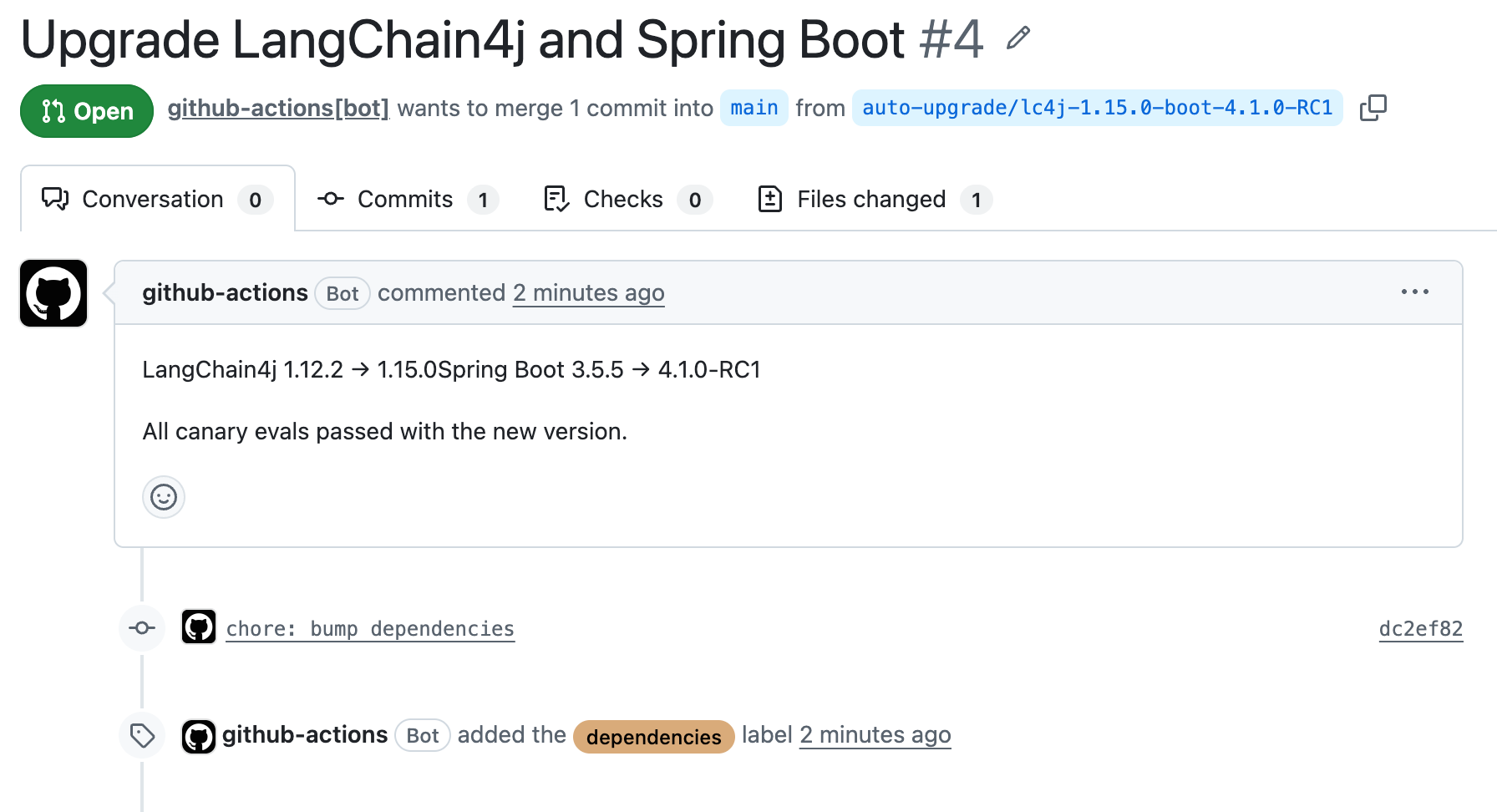
No approach is perfect. While Canary reference apps are powerful, they can't always catch issues from deep integrations or rare production scenarios in larger systems. To close this gap, set up strong monitoring in production—use automated dashboards, proactive alerts for agent performance issues, and targeted logging for new dependencies.
 dcpanda
Complete working source code with pipeline.
Final Thought: Leading Through the Chaos
The fast pace of the AI ecosystem can feel overwhelming, but it's also a big advantage for organizations that know how to manage it. By moving away from rigid upgrade pipelines and using AI-driven Canary sandboxes, you keep your enterprise apps stable and your teams ahead.
What's next? Move the team's thinking from static implementation to continuous discovery.


